UAE Petrol Prices October 2025: Rates, Grades, and Fuel Saving Tips

The United Arab Emirates is a nation built on movement. From the sprawling residential communities across Dubai and Abu Dhabi to the crucial logistics routes connecting global markets, personal and commercial vehicles form the irreplaceable backbone of daily life and the national economy. Therefore, the announcement of the monthly UAE petrol price is not just a budget line item; it is a critical barometer for business planning and household budgeting across all seven Emirates.
In an environment where robust public transportation networks do not always cover every route, personal vehicle ownership is often a necessity, making fuel costs a non-negotiable part of the cost of living. Following the regular monthly review, the official fuel price update for October 2025 confirms a slight upward revision across all major fuel categories compared to September. This adjustment signals persistent inflationary pressure stemming from the global oil market.
Which Petrol Is Best in the UAE?
When drivers pull up to the pump, the immediate question is often which fuel type to choose. The decision of which petrol is “best” in the UAE depends entirely on the vehicle’s engineering requirements and the driver’s financial strategy, rather than a subjective quality ranking.
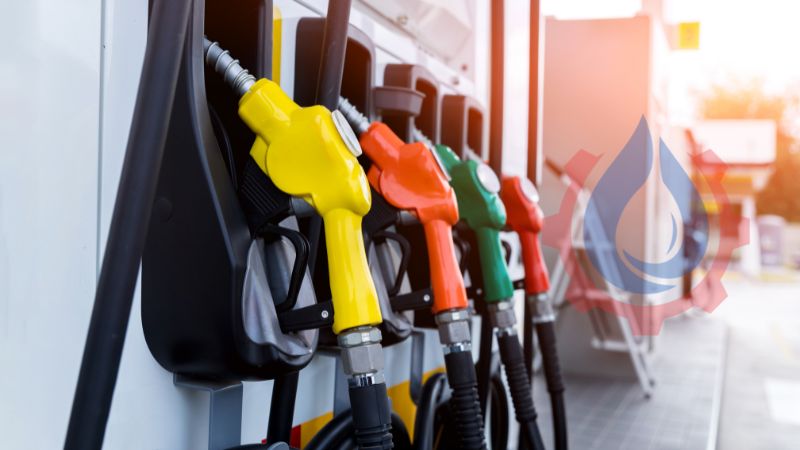
The UAE offers three main grades of petrol: Super 98, Special 95, and E-Plus 91, as well as the industrial diesel rate. Each serves a distinct purpose dictated by octane rating, which measures a fuel’s resistance to premature ignition (knocking) under pressure.
Super 98 petrol is specifically designed for dynamic, high-performance engines found in luxury cars and sports models. These engines operate at higher compression and temperature, demanding a higher octane rating to ensure optimal performance and long-term durability. For a driver whose vehicle manual specifies 98 octane, this is unequivocally the required choice for proper engine function.
Special 95 petrol is the workhorse of the UAE roads. It is a dependable, cost-effective standard that meets the needs of the vast majority of mainstream vehicles used for everyday commuting and routine driving. For most standard sedans and SUVs, Special 95 delivers an excellent mix of drivability and mileage at a manageable cost.
The price difference between the two main grades is minimal but accumulates rapidly over frequent fill-ups. For instance, in October 2025, Super 98 is AED 0.11 more expensive per litre than Special 95.
For drivers of regular vehicles who choose Super 98 when 95 is recommended, they are incurring higher monthly expenses without achieving any corresponding performance benefit, as their engines are not tuned to exploit the higher octane effectively.
Therefore, the best fuel choice for most residents is the one explicitly recommended by the vehicle manufacturer, which is typically Special 95 for standard models, balancing mechanical integrity with cost efficiency.
Official UAE Fuel Price Update October 2025 Rates
The latest adjustments, effective since October 1, 2025, show a uniform upward movement across all fuel products. The changes, while marginal on a per-litre basis, will be noticeable for frequent motorists and commercial fleets.
The table below provides a clear snapshot of the official per-litre prices for October 2025 compared to the previous month.
UAE Official Fuel Prices: October 2025 vs. September 2025
| Fuel Type | Oct 2025 | Sep 2025 | Changes |
|---|---|---|---|
| Super 98 Petrol | 2.77 | 2.70 | +0.07 |
| Special 95 Petrol | 2.66 | 2.58 | +0.08 |
| E-Plus 91 Petrol | 2.58 | 2.51 | +0.07 |
| Diesel | 2.71 | 2.66 | +0.05 |
Month-over-Month Comparison
The data confirms that all categories saw an increase ranging between 5 and 8 fils per litre. The largest marginal increase was recorded for Special 95 petrol, rising by 8 fils. The fact that both consumer grades (Super 98, Special 95) and the commercial grade (Diesel) saw increases suggests that the price pressure is broad-based, originating primarily from the international cost of crude oil rather than localized distribution adjustments.
The Mechanism Behind Monthly Changes
Since the deregulation of domestic fuel prices in 2015, the UAE has maintained a consistent and transparent mechanism for setting the cost at the pump. The UAE Fuel Price Committee is tasked with revising these rates monthly, aiming to align domestic costs with global market realities while maintaining economic balance.
The primary determinant of the local UAE petrol price is the movement of international crude oil benchmarks, particularly Brent crude. The upward adjustment seen in October 2025 reflects recent global trends, where Brent crude has been trading over 68 dollars per barrel. Factors such as ongoing geopolitical tensions, supply concerns related to OPEC+ production quotas, and global inventory fluctuations directly push up the cost of the raw product.
In addition to the cost of crude oil, the pricing mechanism also incorporates secondary factors such as refining costs, distribution overheads, and government policy reviews.
However, the current uniform hike across all fuel types underscores the immediate influence of global instability, such as escalating attacks on infrastructure and falling crude stockpiles in major consumption markets, which directly translate into higher input costs for the Emirates.
The monthly review process is vital for ensuring predictability for consumers while preventing extreme market volatility from causing severe disruptions, as was seen during the historical high prices of 2022.
Impact on Daily Commuters and Delivery Drivers
The slight rise in the UAE petrol price immediately translates into higher operational costs for millions of daily commuters who rely on personal vehicles for school runs, office commutes, and weekend travel. For many low- and middle-income residents, this monthly revision directly cuts into disposable income, heightening the need to manage vehicle efficiency.
The impact is acutely felt by delivery drivers, who form a crucial segment of the urban workforce in cities like Dubai. These contract workers often bear the full burden of fuel expenses themselves, which can total up to AED 6,000 annually. Because their earning model is highly dependent on maximizing the volume of deliveries, a rise in fuel prices significantly shrinks their net daily profit.
This economic pressure forces drivers to chase high-volume incentives, potentially increasing their time on the road or pace of driving to reach bonus targets, illustrating how fluctuating fuel costs have a direct, disproportionate effect on service sector employees.
In the long term, persistent fuel cost volatility has begun influencing consumer behavior regarding vehicle purchases. Many residents are actively considering switching to fuel-efficient automobiles, including hybrid and electric models, viewing these alternatives as a systemic strategy to mitigate the constant fluctuation of the fuel price update.
Effect on Logistics and Retail Transport
The increase in the diesel rate and petrol prices creates a direct upstream cost shock across the entire logistics and retail sector. Logistics is the core function of commerce in the UAE, spanning food delivery, inbound supply chains, and large-scale commercial industries.
When transportation costs increase, businesses, from small food vendors to major retailers, face higher operational expenses.
These costs are inevitably integrated into the final consumer price for goods and services, resulting in broader inflationary pressures across the economy. The cost of moving anything—be it imported items arriving at Jebel Ali Port or local building materials—is passed along, raising the overall cost of living.
As a central global logistics hub connecting Asia, Europe, and Africa, Dubai’s freight operations are acutely sensitive to global fuel volatility. For sea freight, fuel (bunker) can account for up to 60 percent of a vessel’s running costs. In response to this instability, logistics firms are adopting sophisticated strategies to hedge risks.
For example, trucking fleets operating across the Emirates are increasingly investing in dual-fuel tractors to manage diesel rate volatility, demonstrating a long-term shift toward technological diversification in commercial transport to stabilize operational expenses.
Public Reaction and Social Media Buzz
The announcement of the monthly price review is closely monitored by residents across local news outlets and public social media platforms.
While the October increase was acknowledged, the public discussion frequently places the UAE’s prices in a broader context. Many residents recognize that despite the monthly rises, local rates (which remain below AED 3 per litre) are still relatively affordable compared to international prices, particularly in Western markets.
However, the prevailing sentiment is centered on necessity, not absolute cost. Commentators on public forums often point out that the unique geographic spread of UAE cities and the intensity of the climate make reliance on personal vehicles unavoidable.
Unlike many developed nations with accessible, low-cost public transit, the absence of widespread, climate-appropriate alternatives means that fuel consumption is a core requirement for daily mobility.
This dynamic maintains a high level of sensitivity among residents regarding any increase, particularly for middle-class families whose budgets are highly exposed to transportation costs.
Tips for Saving Fuel in the UAE Climate
Given that fuel is an unavoidable expense, adopting fuel-efficient habits is the most effective way for residents to counter the rising cost of petrol. Simple behavioral changes, coupled with consistent maintenance, can significantly reduce the monthly expenditure.
One of the most critical factors in the UAE is managing the extreme heat, which necessitates heavy air conditioning use—a significant drain on fuel economy. To mitigate the “heat tax,” drivers should endeavor to park in the shade or use a sunshade to prevent the cabin from overheating.
Before engaging the air conditioning, driving briefly with the windows down helps to vent the trapped hot air, allowing the A/C system to reach the desired temperature more quickly and efficiently. Additionally, utilizing the A/C at high speeds and rolling down windows at lower speeds can help conserve energy.
Driver habits are paramount to saving fuel. Maintaining gentle acceleration, such as speeding up to 20 kilometers per hour within approximately five seconds, is far more efficient than aggressive driving. Avoiding unnecessary idling is also crucial; turning off the engine when waiting at a curb or an extended stoplight (longer than 30 seconds) can save a measurable amount of petrol.
Finally, regular vehicle maintenance is non-negotiable for preserving fuel economy. Ensuring proper tire pressure is essential, as under-inflated tires force the engine to work harder.
Additionally, adhering to recommended servicing schedules (every 10,000 to 15,000 kilometers) and performing regular tire rotations are necessary steps to keep the vehicle in optimal condition, which can result in a significant overall reduction in fuel spend.
Forecasting November 2025 Fuel Trends
The price hikes seen in October were a direct consequence of global supply concerns and geopolitical tensions pushing Brent crude above the 68 dollar mark. However, the outlook for November is characterized by a delicate balance between continued high demand and potential stabilizing efforts from major producers.
International analysts often forecast Brent crude prices to cluster in the mid-60s per barrel, contingent on measured policies from the OPEC+ alliance. Although crude runs were seasonally low in October due to maintenance, higher production figures reported by OPEC+ in September, coupled with the potential restart of key regional oil exports, introduce downward pressure on global supply.
Furthermore, OPEC+ frequently monitors the market closely and has indicated strategies aimed at market stabilization, which could involve adjusting production quotas. If the alliance opts to increase supply in the coming weeks, it could counteract geopolitical risks and mitigate further sharp increases.
Therefore, while October confirmed a rise, motorists might see prices stabilize or potentially soften slightly in the next fuel price update for November, offering a degree of financial relief should global supply improve.
For the UAE motorist, understanding the engine’s requirements—sticking to Special 95 for routine vehicles and maximizing efficiency through smart driving habits—remains the best defense against the constant ebb and flow of global oil volatility.